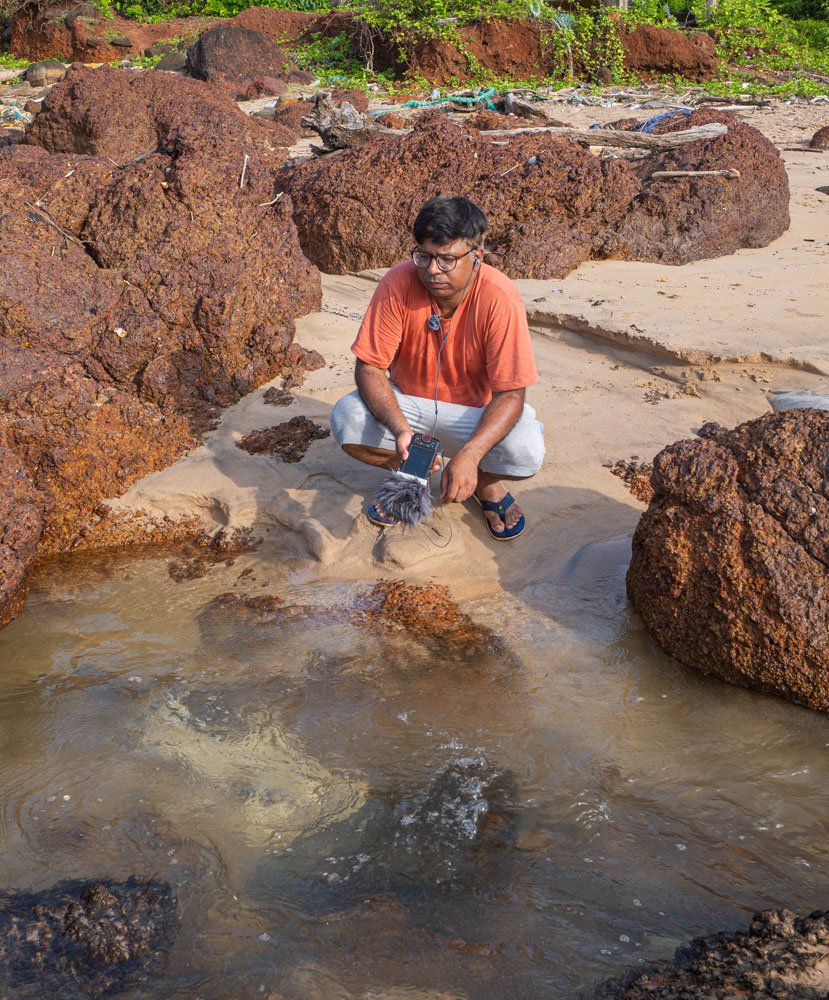
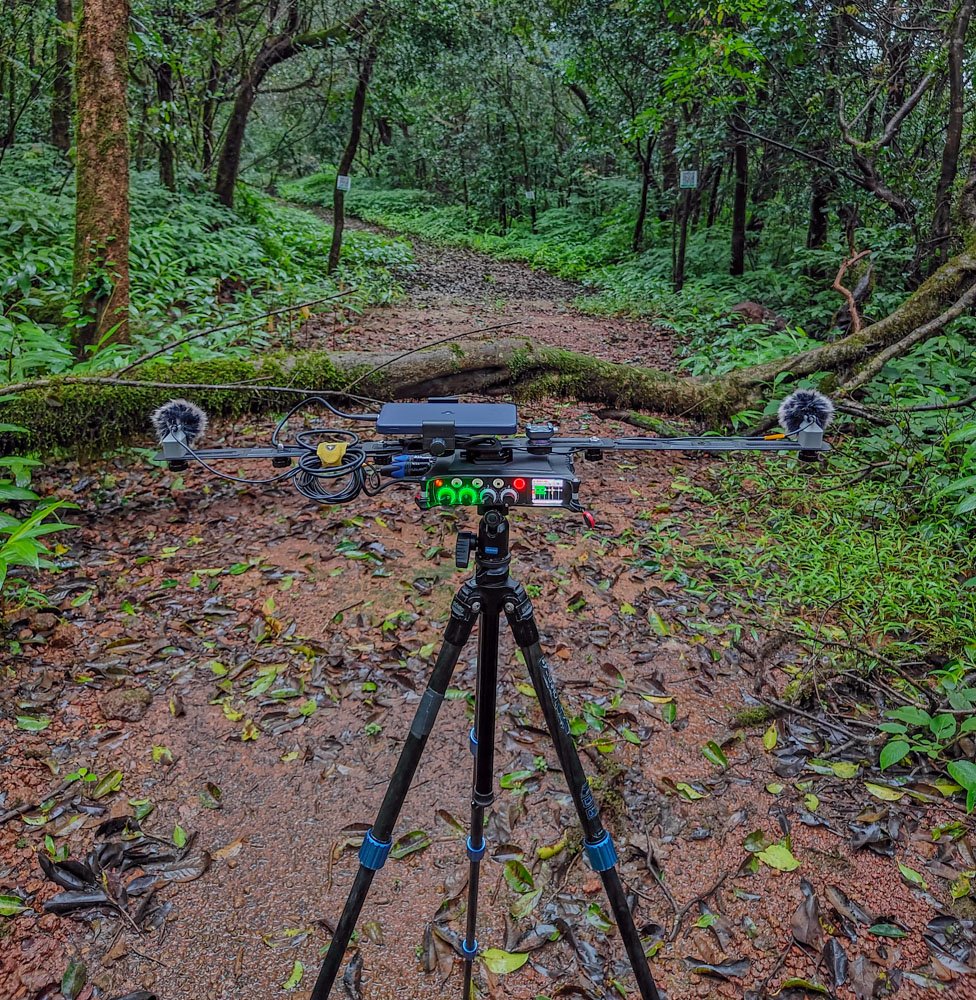
The monsoon transforms the Western Ghats into one of the richest acoustic environments in India. Heavy rain, flowing streams, frogs, insects, birds, wind and dense vegetation create an extraordinary natural soundscape. For a field recordist, however, this environment is also one of the most technically demanding places to work.
- Extreme Humidity
This was my biggest challenge while recording sounds in western ghats during monsoon.
Humidity can remain close to saturation for long periods during the monsoon. Moisture can enter microphones, connectors, recorders and cables, increasing the risk of corrosion, electrical problems and intermittent connections. Condensation can also occur when equipment moves between cooler and warmer environments.
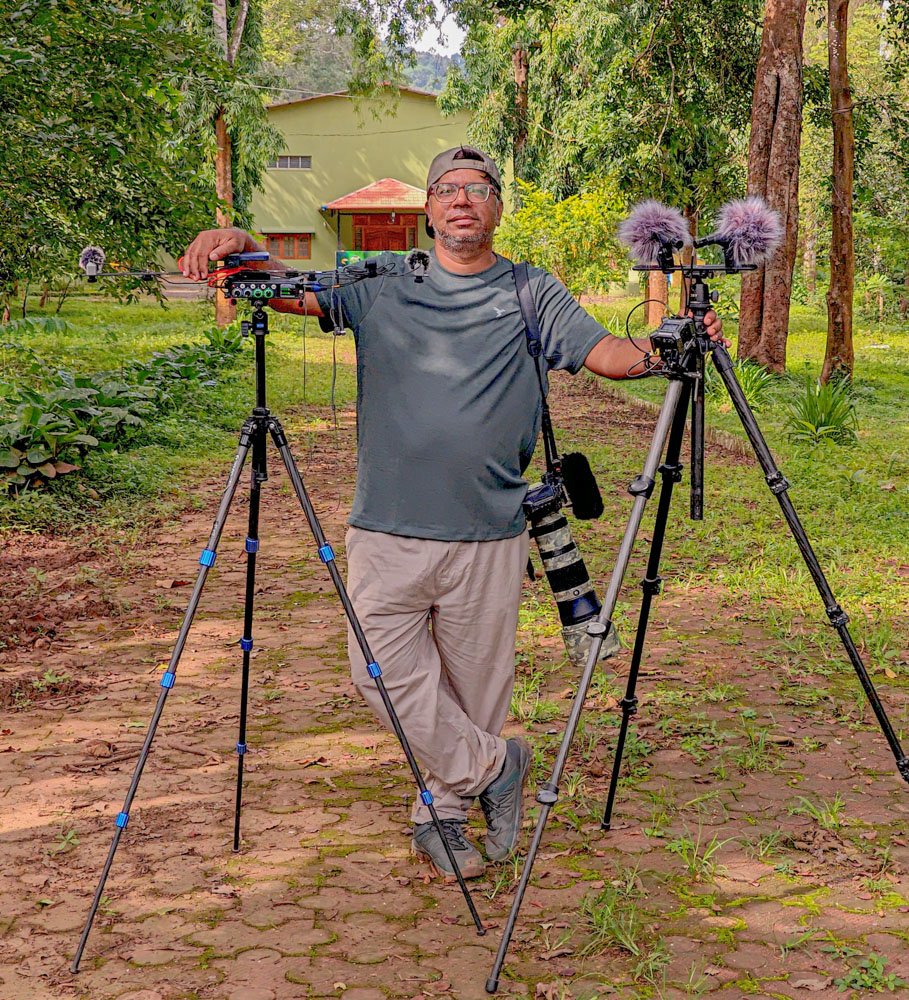
During recent field recording expedition to western ghats, I was carrying different type of mics, but the electret mics suffered badly from the humidity. Micbooster Clippy omnidirectional mics are my primary soundscape recording mics and it started crackling due to high humidity.
For next time, I also bought an air tight transparent box, an hygrometer, silica crystals and a mini dehumidifier.
- Rain and Water on the Microphone
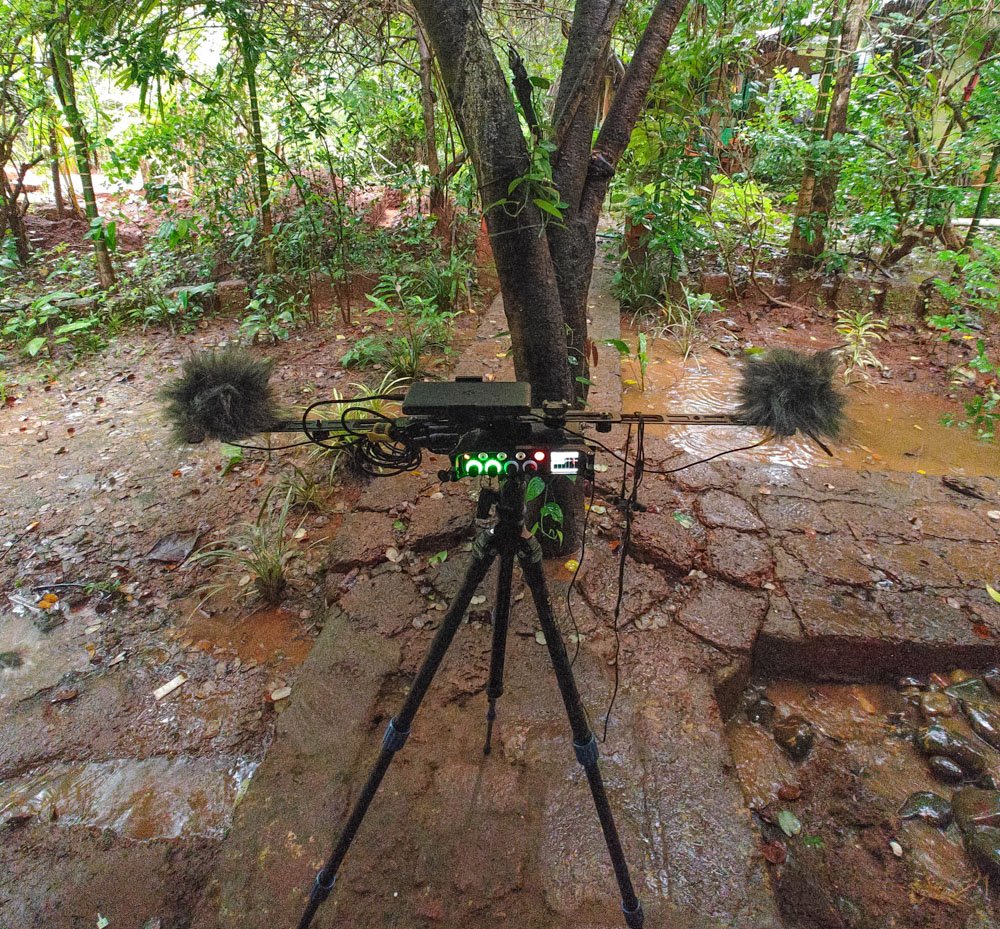
Rain is both an important sound to record and a major technical challenge. Even light drops hitting a microphone windshield can produce extremely loud transients. Heavy rain can completely mask quieter biological sounds such as bird calls, insects and distant animal vocalisations.
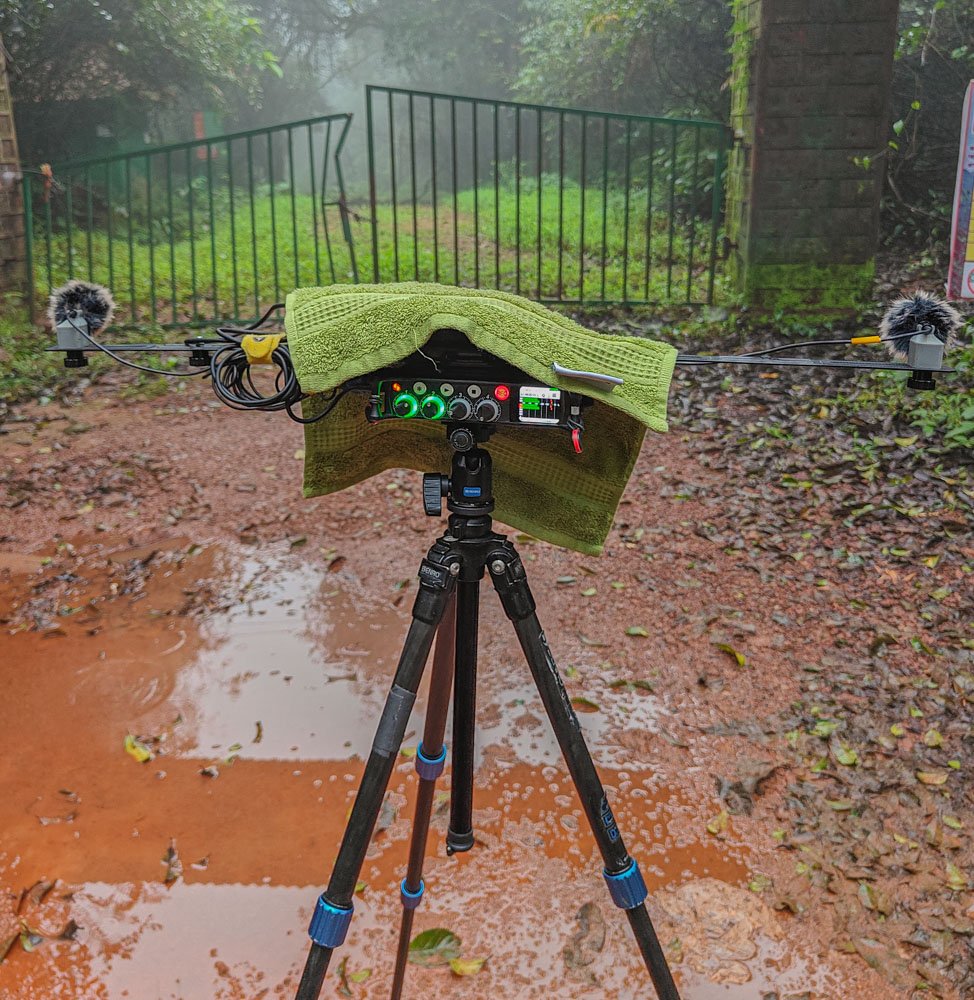
Specialist windshields, rain covers and carefully positioned microphone shelters are therefore essential.
- Increased Self-Noise and Handling Noise
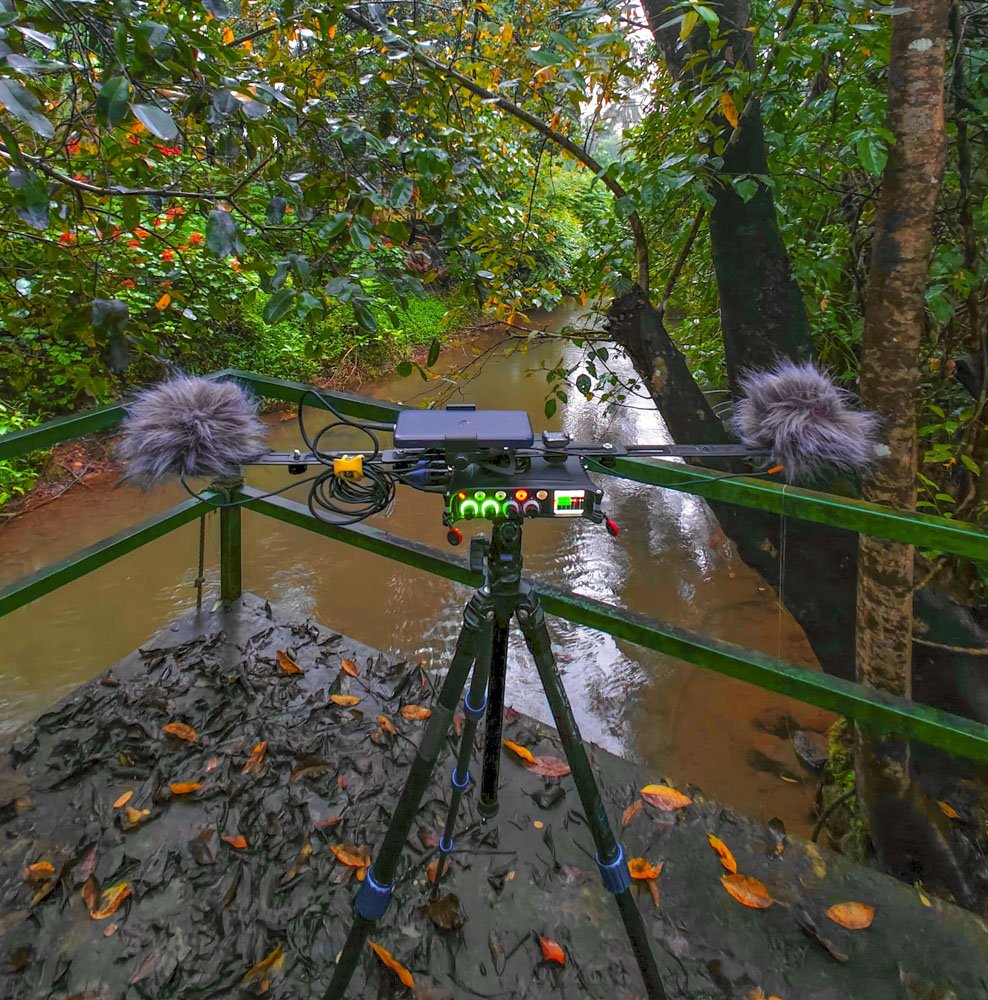
Moisture, wind and wet vegetation can increase unwanted mechanical and environmental noise. Wet cables and microphone mounts may also transmit handling or contact noise. A stable tripod, shock mount and proper cable management become particularly important.
- Condensation
Moving equipment from an air-conditioned vehicle or building into warm, humid forest air can cause condensation. This can temporarily affect microphones and electronic equipment and, over time, contribute to corrosion or damage.
Keeping equipment sealed until it gradually reaches the ambient temperature is an important precaution.
I always keep few large size zip lock air tight bags and keep my mics and camera gears in it before shifting between high temperature difference zones.
- Difficult Equipment Protection
Protecting equipment without destroying the sound quality is a delicate balance. Plastic covers may protect a recorder from rain but can create handling noise, reflections or restricted ventilation. Microphones need protection from direct water while remaining acoustically open.
Dry bags, silica gel, waterproof cases, rain covers and spare cable protection should be part of every monsoon recording kit.
- Battery and Power Problems
High humidity and long recording sessions create additional power-management challenges. Batteries should be protected from moisture and carried in sealed containers. For autonomous recording systems, reliable power becomes particularly important because returning to the recording location every few hours may not be practical.
- Background Noise Becomes Part of the Challenge
The Western Ghats can become acoustically overwhelming during heavy monsoon conditions. Rain on leaves, waterfalls, streams and wind can produce extremely high sound-pressure levels. This can mask the calls of frogs, birds, cicadas and other species.
For biological recordings, choosing the right weather window can therefore be more important than simply choosing the right location.
- Storage and Data Protection
Recording in 32-bit WAV is useful for demanding field conditions, but large files require careful storage management. Memory cards should be protected from moisture, and at least one backup should be maintained whenever possible.
After returning from the field, equipment should be dried gradually rather than immediately exposed to strong heat. Memory cards and recordings should also be backed up before formatting.
The Reward
Despite these challenges, monsoon recording in the Western Ghats can produce some of the most valuable and distinctive natural soundscapes in India. The calls of endemic frogs, insects, birds, flowing water, rainfall and forest vegetation create an acoustic record of an ecosystem at its most active.
For a field recordist, the monsoon is therefore not simply a difficult season—it is an opportunity to document a rapidly changing acoustic environment. With appropriate waterproofing, microphone protection, careful site selection and disciplined data management, the challenges of humidity and rain can be turned into some of the most rewarding recordings in a natural sound library.
-

Amphibian Sound Libraries
$0.00 -
Birds Soundscapes – Indian Birds
$0.00 -
Corbett Tiger Reserve
$0.00 -

Forest night sounds
$0.00
Leave a Reply